045
- Filed
- 13 September 2026
- From
- Site 01 · Northern Palawan
- Reading time
- 9 min
What Actually Breaks When You Go Off-Grid
Not the solar panels. A running list of the failures that actually took us offline — and the boring fixes that kept us online after.
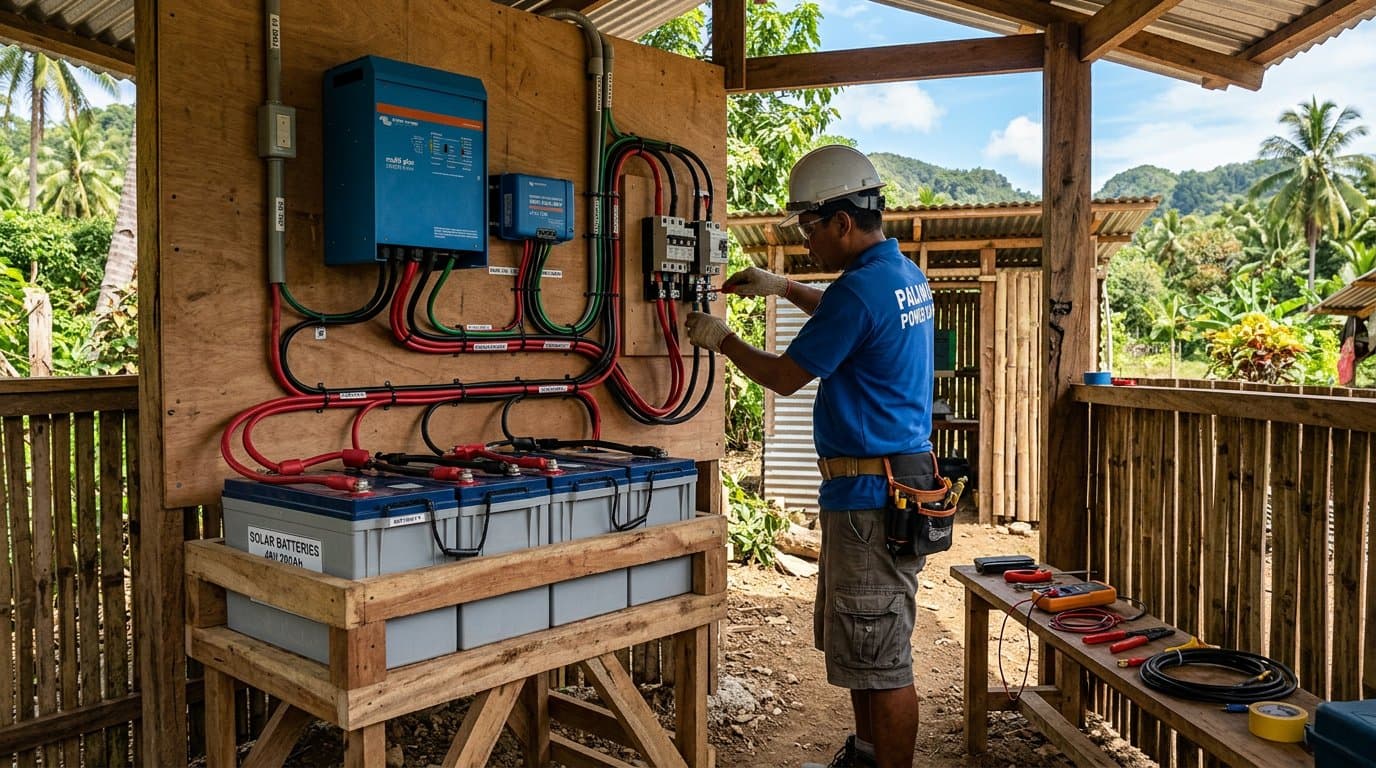
Everyone worries about the panels. The panels are fine. In eighteen months they’ve been the most reliable thing on site. Here’s what actually broke.
§The failure log
- Month 2Inverter shut down at 2 a.m. — high-temperature fault. It was mounted in a sealed room with no airflow. Moved it, added a vent. Never again.
- Month 4Pump controller fried by a lightning strike across the bay. No surge protection on the pump line. Two days of carrying water by bucket.
- Month 7Salt corrosion on every exposed connector within 200 m of the sea. Replaced with tinned copper and heat-shrink on everything.
- Month 9Battery monitor reported 60%. Batteries were actually at 20%. The shunt had drifted. Guests had cold showers.
- Month 13Ants nested in the charge controller. Genuinely. Sealed every cable entry with putty.
“Off-grid doesn’t fail dramatically. It fails at the connectors, at night, when it’s raining.”
§What we changed
- Everything electrical gets airflow, a drip loop and a roof over it.
- Surge protection on every line that leaves a building — power, pump and data.
- A second, independent battery reading. We don’t trust a single number anymore.
- A monthly “walk the wire” inspection with a checklist. Boring. Works.
- Spares on site for anything that takes more than a day to ship: fuses, a pump controller, MC4 connectors, one inverter.
The power system now reports into the same agent layer that runs guest messaging, so a battery dropping below threshold at 3 a.m. becomes a WhatsApp message to the caretaker — not a surprise at breakfast.
More stories
All stories
No. 047Field Ops
Building a Resort Without a Road
Every bag of cement, every solar panel, every nail came in on a bangka at high tide. Here’s what that does to a schedule, a budget, and the way you think about building.
11 min read · 27 Sept

No. 046Automation
Why Local Businesses Fail with Tech (and How We Fix It)
It’s almost never the software. It’s that nobody designed for a two-person business running on one shared Android phone and prepaid data.
8 min read · 20 Sept

No. 044Agents
Deploying AI Agents in a Province with Unstable Internet
Our agents assume the connection will drop. Here’s the architecture that lets them queue, retry, and still hand every message to a human on time.
10 min read · 6 Sept